Showing posts with label rumpus. Show all posts
Showing posts with label rumpus. Show all posts
Friday, April 12, 2013
a private river


Monday, December 24, 2012
adobe books

Friday, November 2, 2012
we have a house in our two imaginations

moss & like an island we are barely moving Just
to exist takes much concentration & like an island
in love we have a house in our two imaginations &
they intersect It strengthens the house & our feelings
Unlike an island we wake up An island never sleeps
That is its duty & ours to remain in love barely moving
We do not want to disturb the house Do not want it
to fall into the ocean that is always so nearby It surrounds
us & is moving Like an island the ocean does not see us
or care why though we persist in loving it at one rate
or another & are waking close together in the dark
Photo: Margaret Kilgallen on view at SFMOMA
Thursday, October 4, 2012
even the doubt

When I teach, I tell my students:
Write. Trust your own voice, your own instincts. Learn your own process. Write. Learn what works for you and trust in that. Writing is a discipline. No doubt. It takes persistence, hard work, and drive. It is about working and reworking a passage, a page, or the arc of a story until it breathes. There is a learned ruthlessness that writing demands, when you can go back through a manuscript and pare out what you love—strip even those lines you most long to keep—it gives what remains a kind of luminous intensity. And there is also that other ineffable, but deeply essential aspect of the process: what is mystical, Muse-given—the obsession, the inspiration, even the doubt—all of which to my mind are only different turns of the same coin. from Life in Fiction by Dawn Tripp in the Rumpus
Photo: Samuel Barnes' Bruno Munari mask making workshop
with my daylight mind

Photo: Samuel Barnes' Bruno Munari mask making workshop
Thursday, April 19, 2012
it's complicated, of course
 I've been thinking about writing, how we create from life. It's complicated, of course. Stephen Elliott in today's Daily Rumpus.
Saturday, January 7, 2012
whatever the scenario
 I'm bringing it up because I want to talk about rejection. I'm not saying Happy Baby is a great book, but it tries to be. If you want to create something great you have to be willing to make something that people dislike, that's the only way to find an audience who is in love with you. If someone loves it then someone else will want to tear it down because it puts certain conventions on display and there it is, what we think we know, sitting uncomfortably on a pedestal, as if under a searchlight, scratching at her neck. Stephen Elliott in The Daily Rumpus, January 8, 2012
Painting: Fathom No. 1, 2010, by Olive Jeffers
Thursday, May 12, 2011

Saturday, December 4, 2010
get in the water

Sometimes I just stop people on the street to tell them about Wendy MacNaughton's work.
Thursday, October 7, 2010
it's not the person,
 it's the player.
Amazing new work, "The Market Street Chess Players in their own Words," by Wendy MacNaughton at the Rumpus.
Wednesday, September 15, 2010
an ambitious project collapsing


"The point isn't A. or the Stone Temple Pilots, or Michael Miller. The point is to write you have to feel. You can't fake it. You can't pretend to love someone the day after they die and write a memoir about it." Stephen Elliott in the Daily Rumpus (do you get the Daily Rumpus?)
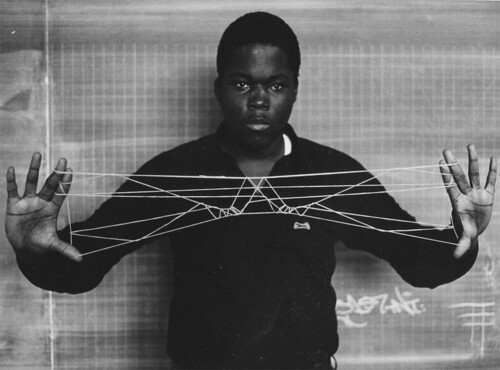
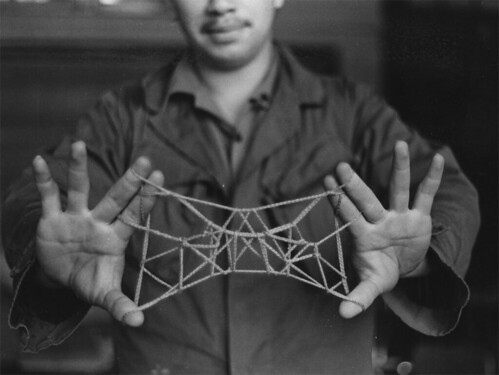
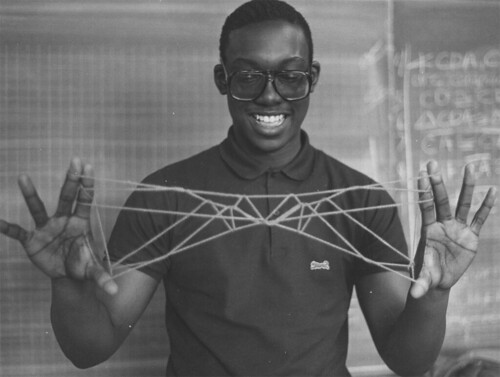
James R. Murphy's La Guardia students with their string figures via An Ambitious Project Collapsing. More here.
Saturday, August 14, 2010
it's not something to hold
"I was thinking about Justin Taylor and a short online conversation we had around this article, the final point being ambition. I was thinking about rock climbing and bouldering problems, the differences in how the routes are rated. You climb with your feet so you don't tire out, but at some point you have to make a move, find the hold, press your hand on the top of a rock that doesn't even make sense, be willing to fall. They say writing's not a competition, and it isn't, but it also is. If we're being honest we should admit certain things. Even a great book might not find its audience, which strikes me as less of a tragedy than spending years writing something that's only very good. There are other factors. It's best just to believe in the meritocracy. It's still most of it. Get your foot up on the wall, stretch toward an innocuous bump. It's not something to hold, but you can lean against it. Work yourself straight until your body is finally angled into the face and you can rest for a moment. I don't know if it's a good thing, but it matters." Stephen Elliott in the Daily Rumpus
Wednesday, June 16, 2010
but the real life
 But the real life of a writer resides in showing up at the keyboard every day, with the necessary patience and mercy, and making the best decisions you can on behalf of your people. It’s a slow process. It often feels hopeless, more like an affliction than an art form. Steve Almond from The New Yorker's One over 40 in The Rumpus
Photo via per temeritas
Tuesday, May 4, 2010
so soundly slaps
 ...there’s no accounting for lust, my friend, and nothing that so soundly slaps together the nasty with the desirable. Amy Letter, Poem I Love in The Rumpus
Tuesday, February 3, 2009
poets who write prose
 I've been reading Another Bullshit Night in Suck City by Nick Flynn and this remembrance of John Updike by Lucy Corin on The Rumpus, which pointed me to this For This I Believe by John Updike. Oh, and this is wonderful: "I made tea," by Joe Davis (via this is sippey.typepad.com).
Subscribe to:
Posts (Atom)